

MODERNIZING THE LEGAL IMMIGRATION SYSTEM
There is widespread agreement that the US legal immigration system is outdated and overly complicated. Of the 70 immigration reform ideas proposed and considered by the group CommonSense American organized, modernizing the system was overwhelmingly rated the most promising. The specific modernization proposals fall into three buckets: 1) technological, 2) process, and 3) data.
Technological Modernization
There are two proposals to modernize the legal immigration system with technology.
1. Pilot a Integrated Visa Processing Portal
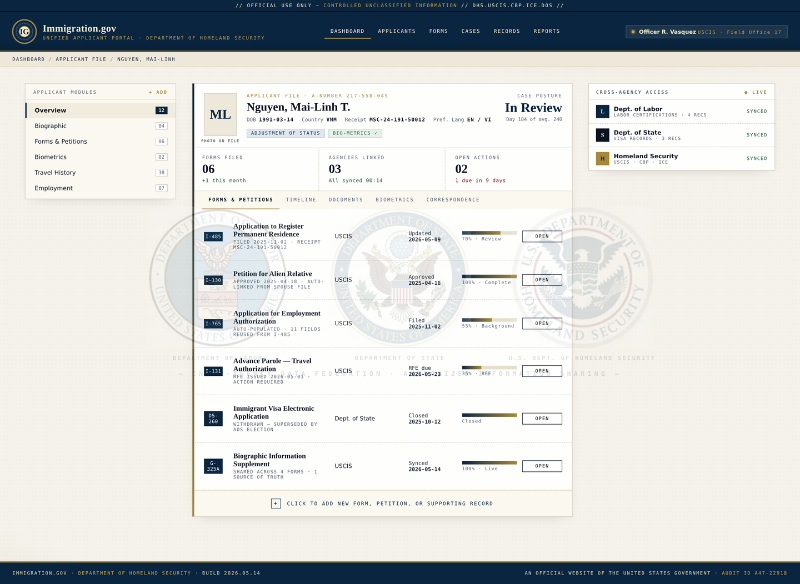
The proposal is to update the legal immigration system by implementing new technology to create a single digital portal for filing and processing visa applications. The proposal is to conduct a pilot with one specific temporary work visa where native worker shortages are especially pronounced before attempting to modernize other visa application processes.
Under the current system, individuals wishing to migrate to the US legally and employers seeking to sponsor foreign workers must navigate an extraordinarily complex system involving the Department of Labor (DOL), the Department of State (DOS), and the Department of Homeland Security (DHS). Within DHS, three agencies are involved: 1) US Citizenship and Immigration Services (USCIS), 2) Customs and Border Protection (CBP), and 3) Immigration and Customs Enforcement (ICE). Each department and agency plays a different role along the complex path to receiving a visa to enter the country legally. Both individuals seeking to come here and employers wishing to sponsor a foreign worker must supply the same information at multiple points in the process. There is no integrated data system that involved agencies can use to access and share information. Information is on multiple paper forms for each applicant and is not organized or aggregated by applicant across forms. Computerized parts of the system are frequently outdated. One individual could have multiple applications pending at one time or over the course of their life, but each of their filings is stored in a separate case file, often housed across different agencies, and usually requiring the applicant to supply their immigration history rather than enabling the agencies to pull up their own or other agencies’ records.
The technological modernization proposal aims to address these issues. Immigration forms would be fully electronic rather than paper-based. A single portal (e.g. Immigration.gov) would be created that would aggregate all the information across forms for a given applicant. Officials from relevant agencies could access all prior records for a specific applicant.
The portal would allow sponsoring employers to file all relevant materials at once, without having to resubmit the same information to different agencies. It would provide greater transparency, allowing applicants and sponsors to track where an application is in the process, which agency is responsible for the next action, and how long it is expected to take.
The technological modernization proposal aims to address these issues. Immigration forms would be fully electronic rather than paper-based. A single portal (e.g. Immigration.gov) would be created that would aggregate all the information across forms for a given applicant. Officials from relevant agencies could access all prior records for a specific applicant.
The portal would allow sponsoring employers to file all relevant materials at once, without having to resubmit the same information to different agencies. It would provide greater transparency, allowing applicants and sponsors to track where an application is in the process, which agency is responsible for the next action, and how long it is expected to take.
The proposal would require all agencies to accept digital signatures if the applicant or sponsor prefers them.
The proposed legislation would include authorization for sufficient funding for all three Departments to update their IT systems and coordinate implementation. The funding would include both funding authorization and ongoing fees.
The Case For
Supporters of the single digital visa processing portal argue that it would increase the overall security of the legal immigration process. Currently, officials often have to decide on applications without all the relevant information about an individual or a sponsor. Proponents, including professional staff from Republican and Democratic administrations, argue that the proposed system would significantly reduce fraud and enhance national security by eliminating opportunities to provide contradictory information to different agencies. Proponents contend that the proposed system would reduce redundancies, increase government efficiency, and enable faster decision-making, helping address significant backlogs.
Advocates argue that the system would also be more efficient, transparent, and user-friendly for applicants and sponsoring employers. Some argue that this streamlining is especially useful given the growing need for foreign workers to meet specific labor-market shortages. They argue that requiring all agencies to accept digital signatures will reduce mailing delays and lost documentation.
Advocates argue that the proposed pilot to modernize the technology for a single temporary work permit would enable learning about the challenges, making subsequent potential visa modernization more feasible and effective.
The Case Against
Many of the criticisms of the technological modernization proposal focus on feasibility. Some argue that implementing this type of system would require levels of cooperation among relevant agencies that are unrealistic. Opponents also note that reliable estimates of the costs have not yet been made. They argue that reliable cost estimates haven’t been produced and that, whatever the figure, it will remain substantial for many years. These opponents argue that it is unwise to start such a massive overhaul, even in pilot form, that could take many years to complete. They suggest that the significant federal debt and deficit, and Congress’s dysfunction, make it difficult to have confidence that the determination and funding will be sustained at the levels needed over the time it would take to get this system up and running. Given that uncertainty, some argue we should spare taxpayers or spend the money elsewhere.
Opponents note that the age and complexity of current government systems make the project’s technical aspects challenging. Errors that may occur could cause major disruptions to current functioning and increase backlogs and delays.
Other arguments against modernization are based on information security risks. Some opponents argue that centralizing every agency’s immigration information in one portal, which would contain a vast amount of sensitive data, would pose greater cybersecurity risks than dispersing this data across multiple agencies and departments. They also note that shifting to a person-centric model in which all agency officials can see all available information about a particular individual, rather than only that directly relevant to their agency, could empower enforcement-focused agencies to act beyond their current statutory authority.
Some opponents argue that the current system’s cumbersome, outdated nature is a useful way to limit too much foreign labor into the country. We should not be spending enormous time and money to make it easier to bring in foreign workers who will compete with US workers.