

INTRODUCTION

Immigration is the most consequential and challenging issue that CommonSense American has yet taken on. While criticism of the current system is nearly universal, consensus on how to fix it has eluded Congress for over three decades. No issue is tearing at the fabric of our nation more.

We’re bringing new strength to this challenging issue. We chose immigration and are working on it in collaboration with Congress’s bipartisan Commonsense Coalition. This bipartisan group has led nearly all of the successful major bipartisan legislation in the last decade. Given separation of powers and extraordinarily narrow partisan majorities, bipartisan support is the only realistic path for major legislation. The group of critical Republican and Democratic lawmakers we’re working with, along with many other members of Congress, are eager to hear what you think.

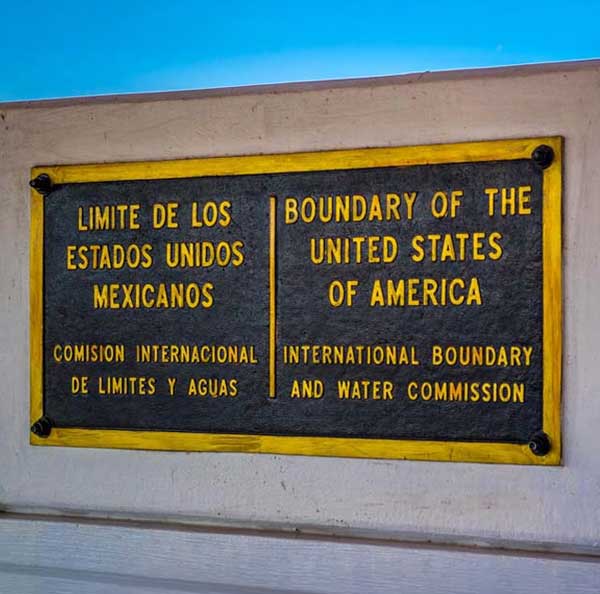
Entry Point Welcome Sign

THREE KEY DEVELOPMENTS

Despite the divisiveness, there is more agreement on the future of US immigration—both in Congress and among citizens—than is commonly recognized. While there is not yet sufficient congressional consensus to pass legislation, three developments are improving the prospects.


01

Precondition Met to Make Border Significantly More Secure

For years, many in Congress have made substantially decreased illegal border crossings a precondition to consider broader immigration reform. Currently, encounters at the southern border are at their lowest levels in decades, opening a new window for legislative dialogue.


02

Demographic Workforce Pressures

An unprecedented demographic shift is creating pressure for more workers, particularly for core skill jobs that require little specialized training. While policymakers remain divided on whether to admit more foreign workers to address this situation, the demographic challenges are not seriously disputed:

â–Ľ SHRINKING WORKFORCE
3.6M
FEWER WORKING AGE BY 2037
The Congressional Budget Office (CBO) estimates the number of working-age Americans (ages 20–64) will shrink by approximately 3.3 million over the next ten years (approximately 300,000 per year) without immigration. By 2037, there will be 3.6 million fewer people in this age group.
â–˛ GROWING 65+
13M
MORE RETIREES
Simultaneously, the population aged 65 and older is expected to grow by 13 million.
âš– THE SUPPORT RATIO
40M
WORKING-AGE AMERICANS NEEDED
These historic changes mean the ratio of native workers to retirees will decline steeply. Today, there are approximately three working-age Americans for every retirement-age American. This 3-to-1 ratio has been an important component of the American economy and the viability of core government programs like Social Security and Medicare. Maintaining it over the next 10 years would require 40 million more workers than the US is projected to have without immigration.

03

Urgency Created by Increased Enforcement

Current policy, according to existing statutes, is to deport all who are here without legal status or a pathway to it. The Trump administration’s highly publicized enforcement actions have led lawmakers to feel greater urgency for bipartisan legislative action to change those statutes. Many Democrats agree on the need to more effectively apprehend and deport those with criminal records. Many Republicans agree that long-term undocumented residents who have worked, paid taxes, and have not committed other crimes should have a way to earn a form of legal status.

THREE REFORM AREAS

Even with these developments, it is unclear which, if any, immigration legislation can pass. Still, three reform categories are under active consideration in Congress.

01

Securing the Border

Congress passed the One Big Beautiful Bill Act (OBBBA) in July 2025, providing approximately $85 billion for border security, not including Immigration and Customs Enforcement (ICE) or other immigration efforts. However, as a budget bill, it necessarily lacked policy provisions. Lawmakers, including Republican leadership, argue that additional legislation is needed to ensure future administrations keep the border secure.

02

Reforming Legal Pathways

There are bipartisan efforts to modernize the system for future legal immigration. This work focuses on updating the system to better identify those we want in the country to fill jobs when not enough US workers are available. The emphasis is also on ensuring temporary immigrant workers don’t replace American workers, depress pay, or erode working conditions for both native and foreign workers.

03

Addressing the Undocumented Population

Congress is again considering reforms that address the 12 – 14 million people already here without legal status. One possible bipartisan path may involve a two-pronged approach: (1) deportation for some (particularly criminals), and (2) a pathway to earning some form of legal status for others under certain stringent criteria and conditions. 

ORGANIZATION OF THE BRIEF

The first three sections of the brief review reforms in each of these broad categories. Our discussion of each proposal includes four core elements:

  1. Description
  2. Case For
  3. Case Against
  4. Support or Oppose Question

Our focus is on proposals that Congress is seriously considering. In seeking the bipartisan support necessary to pass, many of the reforms described below are compromises. Consequently, the case for or against is often divided into competing perspectives that make nearly opposite arguments.

For reforms where this is true, we also ask which competing camp’s arguments you find more compelling. When the proponents or opponents do not clearly fall into competing camps, we do not ask that follow-up question. The bipartisan group of lawmakers we’re working with has asked for this information to help them judge if adjustments in one direction or the other would attract broader support.

Even when you don’t agree with either camp, your answer to these follow-up questions will provide important feedback for Congress.  

Single Reforms or Reform Packages?

The first three sections of the brief ask whether you support or oppose each individual proposal on its own merits, without making assumptions about what might be passed with it.

Whether to reform the immigration system incrementally or through packages of multiple reforms is itself a matter of significant congressional debate. The fourth and final section reviews a likely bipartisan compromise package that includes proposals from all three categories.

There are policy arguments for pursuing both broader reform packages and individual reforms independently.

Reform PackAges

The “fences and gates” approach — reform all three legs of the stool together.

On the side of reform packages, the three elements that organize the brief—border security, legal pathways, and status for the undocumented—can be compared to the three legs of a stool. The system is arguably more stable if all three are reformed and working together.

Legislation that combines border security with reformed legal pathways for future workers is sometimes described as “fences and gates” immigration reform. Historical experience suggests that without “gates” (legal pathways), strong labor demand in the US overwhelms even the stoutest “fences” (a secure border). Conversely, without secure “fences,” the “gates” can’t play their intended role of letting the country decide who enters and on what terms. If effective fences and gates for future immigration are established, that still leaves the question of the 12 – 14 million who are already here.  

Single Reform

Tackle the most achievable elements first, one step at a time.

There are also reasons to favor pursuing individual reforms independently. More comprehensive reform may be too complex and less politically viable in Congress. Each proposal involves its own complicated trade-offs and expertise. Bundling many proposals across all three categories can stretch lawmakers thin and make it difficult to fully weigh the merits of each provision. Incremental reforms also make course correction easier. If a particular reform isn’t working in practice, it can be adjusted without unraveling a larger package.

As you consider each proposal, it’s useful to consider it relative to your ideal for the US immigration system. Even more relevant is whether you believe it would improve the current system. Almost everyone agrees that the US immigration system is deeply flawed. Yet one of the main reasons no major reform legislation has passed in the last 30 years is that competing sides have held out for their preferred solution, even when they believed the proposal on the table would meaningfully improve the current system.