

We’ll start with proposals to better secure the border. The proposals that Congress is actively considering include physical barriers, deploying technology along the border, and changing the policies by which immigrants can request asylum at the border.
You're viewing a single section of this policy brief.
Read the Full Brief ↗BORDER SECURITY
MORE ILLEGAL CROSSINGS
From 1960 to 1980, the number of encounters with immigrants attempting to cross the southern border without authorization rose from about 21,000 per year to about 800,000, as shown in the chart. From 1980 to 2020, the number of encounters varied considerably year to year. From 2020 to 2023, we experienced the most dramatic increase in our history. Border encounters increased from under half a million in 2020 to a record 2.4 million in 2023. Since then, encounters have declined to their lowest level since 1970. The turnaround began in 2024, the last year of the Biden administration, when the numbers dropped to one million. Under the second Trump administration, the pace dropped to less than 500,000 per year.
The One Big Beautiful Bill Act (OBBBA) provided $85 billion for border security. However, because it was a budget bill and necessarily excluded lasting policy changes, future administrations could significantly change course. Now, Congress is considering legislation to establish lasting, effective border enforcement.
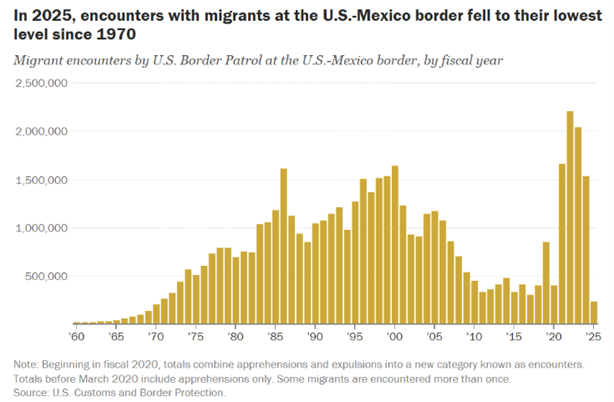
BORDER SECURITY AND ASYLUM
More permanent border security requires addressing asylum reform. The asylum system was established in 1980 and allows immigrants to request asylum and stay in the US because of their fear of persecution if they returned to their home country. Since then, asylum requests have shifted from a rare legal safety net into a significant driver of border activity. Relaxed asylum rules act as a magnet, encouraging migrants to surrender to Border Patrol agents in hopes of being released into the US pending a court date. Border encounters drop when those rules are tightened—such as through stricter eligibility or immediate removals.
The Biden administration’s relaxation of several asylum restrictions from the first Trump administration contributed to the surge in border encounters from 2021 to 2024.
Three other factors contributed to the surge in that period even more.
Demand for workers in the US
Historically low levels of unemployment in the US created a strong demand for additional workers.
Growing Unemployed Working-Age Population Push from the South
A growing number of working-age people during a time of unusually high economic and political instability in many Latin American countries, especially Venezuela, propelled workers to seek jobs in the US at historic levels.
End of COVID Pandemic
During the pandemic, lockdowns and border closures suppressed migration, creating pent-up demand that was released with the pandemic’s end.
In response to the border crisis, the Biden administration reversed course and, among other things, tightened asylum limits in 2024. Those measures, followed by the second Trump administration restricting access to asylum at the border even more, have contributed to the current low levels of border incursions.
We now turn to specific proposals to secure the border through future administrations.
You're viewing a single section of this policy brief.
Read the Full Brief ↗