

MANDATORY E-VERIFY

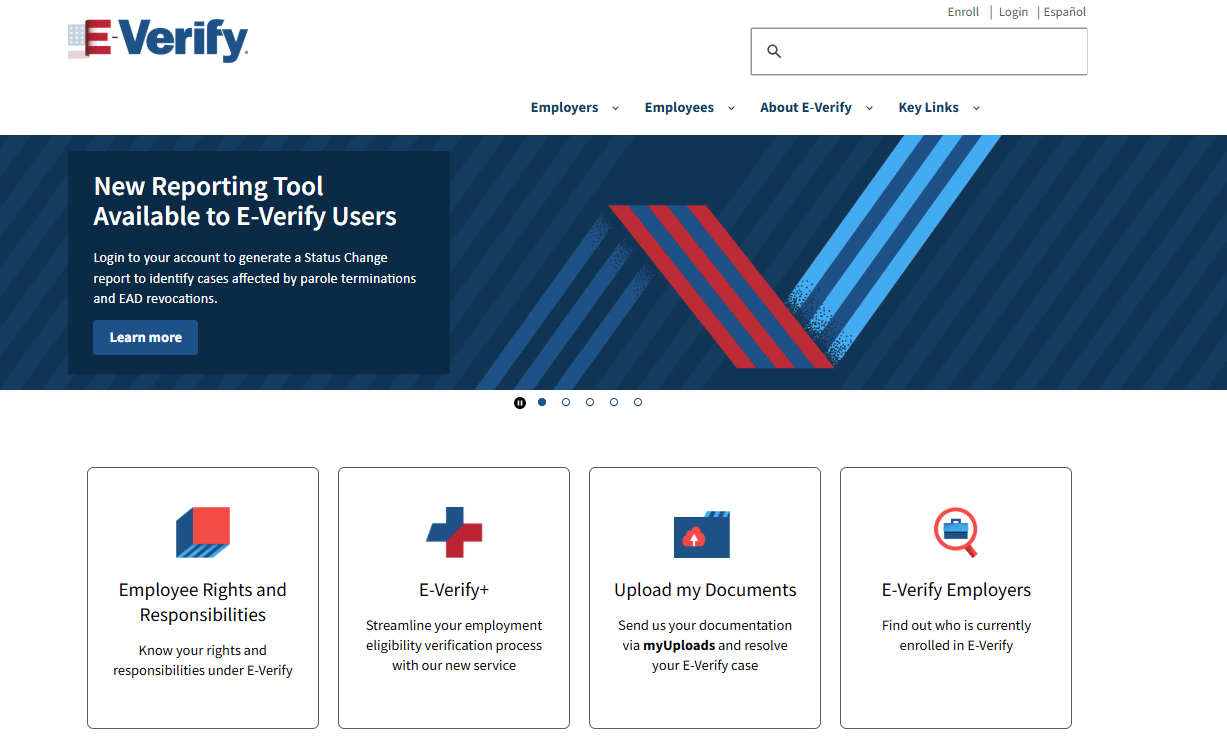
Because a primary draw for illegal immigration remains the prospect of working in the US, some have proposed implementing mandatory E-Verify to ease pressure at the border. All employers are required to check new hires’ authorization to work in the US by reviewing their identity and work authorization documents. However, readily available fraudulent documents have led to the creation of E-Verify. E-Verify is a federal system that electronically matches the documents presented by a new hire against Department of Homeland Security and Social Security Administration records. Despite historic enforcement funding in the OBBBA, E-Verify remains voluntary for most private employers under federal law, creating a patchwork of state-by-state rules. This legislative proposal would permanently authorize the system and make it strictly mandatory nationwide over a three-year phase-in period, with smaller and certain types of businesses, such as agricultural, joining last. It also pairs the mandate with severe penalties for employers that knowingly hire undocumented workers. There are civil fines up to $25,000 per violation, with potential criminal liability—including prison sentences—for repeat offenders.

The Case For

Supporters argue that E-Verify helps keep the border secure by reducing pressure on it. They argue that a border wall and technology system cannot withstand the relentless pressure of an unregulated US jobs magnet.

They also view it as a way to protect the dignity of American workers. For decades, they argue, companies could bypass native workers and flood the market with people willing to work for less, undercutting wages  and working conditions by hiring undocumented workers. Advocates cite research findings that after Arizona required E-Verify, its unauthorized population fell by about 17 percent. They argue that the effect of the federal legislation would be even greater with the new civil fines and potential prison time for repeat offenders.

Proponents emphasize that this is a matter of fairness and of restoring the rule of law in the workplace. They argue that without mandatory E-Verify, honest businesses that hire legal workers are undercut by competitors who cut costs with cheaper, undocumented labor.

Supporters note that E-Verify is free, takes minutes, and instantly clears about 98% of new hires. They also argue that the phase-in gives small and agricultural businesses the time they will need to learn the system and make adjustments to their existing workforce. The real burden, proponents argue, already falls on law-abiding employers who follow the rules while others pay nothing for breaking them.

What the Evidence Says—Jobs and the Economy

Credible research indicates that immigrant workers can sometimes take the place of some native workers, which economists call the substitution effect. These substitution effects tend to concentrate among US workers with whom immigrants share similar skills, such as lower-skill minorities and prior immigrants, although the size of the effects on minorities is contested. Evidence also shows that when businesses can’t hire temporary workers in jobs for which it’s especially hard to find native-born workers, the businesses shrink and hire fewer native workers too. In the opposite scenario, reputable studies also confirm that when businesses are able to hire immigrant workers into hard-to-fill jobs, they expand more and hire more native workers in other jobs needed at that business, which economists call the scale effect. A growing body of research suggests that the scale effects are much larger than the substitution effects, meaning that hiring immigrants generally has no broad negative effect or creates more jobs for native workers, not fewer. Studies consistently find that immigrants are about 50% more likely to start new businesses than natives, from small businesses to industrial giants. Because entrepreneurs on average create jobs, a workforce with relatively more immigrants creates jobs for native workers more than a workforce with relatively fewer immigrants. According to the best available evidence the net effect of immigrant workers is to stimulate the creation of more jobs for native workers and significantly grow the economy, but evidence is less conclusive on the impacts for concentrated groups of US workers who may compete more directly with new immigrants. While some claim that higher numbers of undocumented immigrants in an industry can lead to worse working conditions, and negatively impact US workers as a result, there is little evidence indicating that these spillover effects are common or related to the presence of undocumented workers. While a greater supply of undocumented labor puts downward pressure on the wages of natives who remain in directly competing roles, it puts upward pressure on the wages of natives who shift into complementary tasks. In the best evidence we have, these effects roughly balance for workers at the same firm, with a negligible positive effect on the wages of native coworkers. Studies suggest that undocumented workers themselves face lower wages and are not compensated as much when working in dangerous conditions. The evidence suggests that unscrupulous employers may take advantage of workers’ lack of legal status to cut corners on wage and safety laws, since undocumented workers are less likely to file complaints out of fear of deportation. It’s clear that undocumented workers themselves are the most disadvantaged by their lack of legal status, and evidence indicates that overall impacts on US workers are not substantial.

What the Evidence Says—Native Workers’ Wages

The effect of immigrants on native workers’ wages is among the biggest concerns expressed in Congress and among Americans, and as a result economists have rigorously studied this topic. The best economic analyses consistently show that the long-run, total impact of increased immigration on Americans’ average wages is nearly zero (NAS 2017, Peri 2014, BPC 2014). One of the best analyses of 27 different economic studies finds that in 19 of these 27 studies, a 1% increase in immigrants’ share of the labor force predicted changes to native workers’ wages narrowly ranging between -0.1 and 0.1 percent. Applied to today’s economy, these findings indicate the median American family could see their income change, rising or falling, by about $63 a year if 1.67 million more immigrants enter the workforce. The best studies may show a negative impact or a positive one, but the size of these impacts is consistently very small. There may be few issues in all of economics on which there is stronger consensus. Because many immigrants arrive in the US with lower levels of formal education, there is special concern among policymakers about the impacts of immigration on Americans whose highest educational level is a high school degree or lower. Under a strict series of economic assumptions (primarily about the degree to which different US and immigrant workers act as substitutes to each other in the labor market) some economic studies find a larger negative effect of immigration on wages for Americans without a high school degree. Using these same assumptions, the effects on the wages of those with a high school degree are positive and outweigh any total negative wage effects from immigration. Under equally plausible economic assumptions, research has even found positive effects on the wages of Americans with less than a high school degree. Using real-world data from a massive influx of Cuban immigrants into Miami in 1980, economists found a near-zero impact of the rapid increase in immigrants on the wages of native workers, even on those with only high school degrees. While there is mixed evidence regarding the impacts of immigration on the relatively small number of Americans with less than a high school degree, economic evidence consistently demonstrates that other factors have been far more responsible for declining wages among the much larger group of those with a high school degree or less. Between 1979 and 2019, these Americans saw their median real (inflation adjusted) wages decrease by 13.7% while wages for Americans with a bachelor’s and advanced degree increased by 9.2% and 27.2% respectively. The best economic studies attribute these relative wage losses mostly to technological shifts (two studies here and here) and somewhat to changes in international trade (especially with China). These studies generally conclude that immigration was not an important factor in the relative wage losses of Americans with high school degrees. Finally, evidence indicates that the effects of immigration policy choices depend on other policy decisions by the government. For example, the small labor market effects of immigration on the least-skilled natives are most benign in states that have adopted the strongest labor-market protections for all workers, native and immigrant alike.

The Case Against

Opposition comes from three perspectives:

Pro-Business

The first is pro-business. Employers argue that E-Verify is free to use but costly to comply with, including expenses for enrollment, staff training, and screening hires. One 2011 analysis estimated a nationwide mandate would cost employers about $2.7 billion a year, mostly borne disproportionately by small firms. Agriculture, construction, and hospitality warn it would cut off workers they rely on with no legal replacement, so many business groups back it only if paired with expanded work visas or a path to status for their existing workforce.

vs
Civil Liberties

The second is a civil liberties concern. With no uniform national ID for lawful workers, including US citizens, verifying everyone’s status nationwide risks becoming a de facto national database that could track more than just work eligibility. Errors can flag authorized workers—even citizens—wrongfully over a misspelled or changed name. The system confirms whether a document is genuine but not whether it belongs to its user, so fraud still slips through.

vs
Progressive Advocates

The third is a humanitarian concern from progressive advocates. They argue that a mandate will not stop undocumented immigrants from working but will push them into an underground cash economy where they are more exposed to exploitation, dangerous conditions, and wage theft. When Arizona required E-Verify, informal self-employment among unauthorized men doubled.