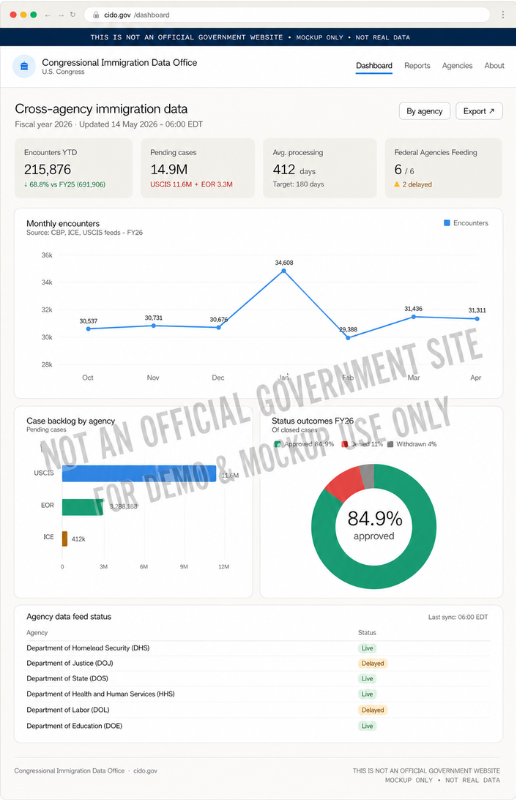

CONGRESSIONAL IMMIGRATION DATA OFFICE
This proposal would establish a single federal office to provide integrated, comprehensive immigration data and analysis from across relevant agencies. The information collected would include:
- Labor Market Needs—Worker shortage data and the level of additional labor needed, if any, at various skill levels across industries and occupations. This would include whether those needs suggest raising, lowering, or holding current caps on relevant visas.
- Immigration Impacts on the US—The effects of immigration nationally and by state, both positive and negative, on economic growth, fiscal health, and US workers’ jobs and wages. This would cover the substitution and scaling impacts of foreign workers and wage data by visa category. It would also include impacts on local, state, and federal government services, crime, and housing.
- Impacts on Immigrants—The experience of immigrants admitted through different visa pathways, including the prevalence of exploitation by employers, integration into the workforce and communities, English language acquisition, and use of government benefits and services.
The office would be a nonpartisan arm of Congress, housed within an existing agency such as the Congressional Budget Office (CBO), the Government Accountability Office (GAO), or the Congressional Research Service (CRS). Alternatively, it could be a new office, such as a Congressional Immigration Data Office.
The proposal would require the office to publicly issue reports on labor markets and other immigration impacts at least every two years. The reports would recommend whether employment-based and other visa caps should be raised, lowered, or left unchanged. They could also recommend adjusting visa selection criteria to admit immigrants most likely to contribute to the economy.
The office would be authorized to obtain relevant public and non-public data from the many congressional and executive branch agencies that already collect it. Congressional sources would include the CBO, the GAO, the CRS, and the Joint Committee on Taxation.